
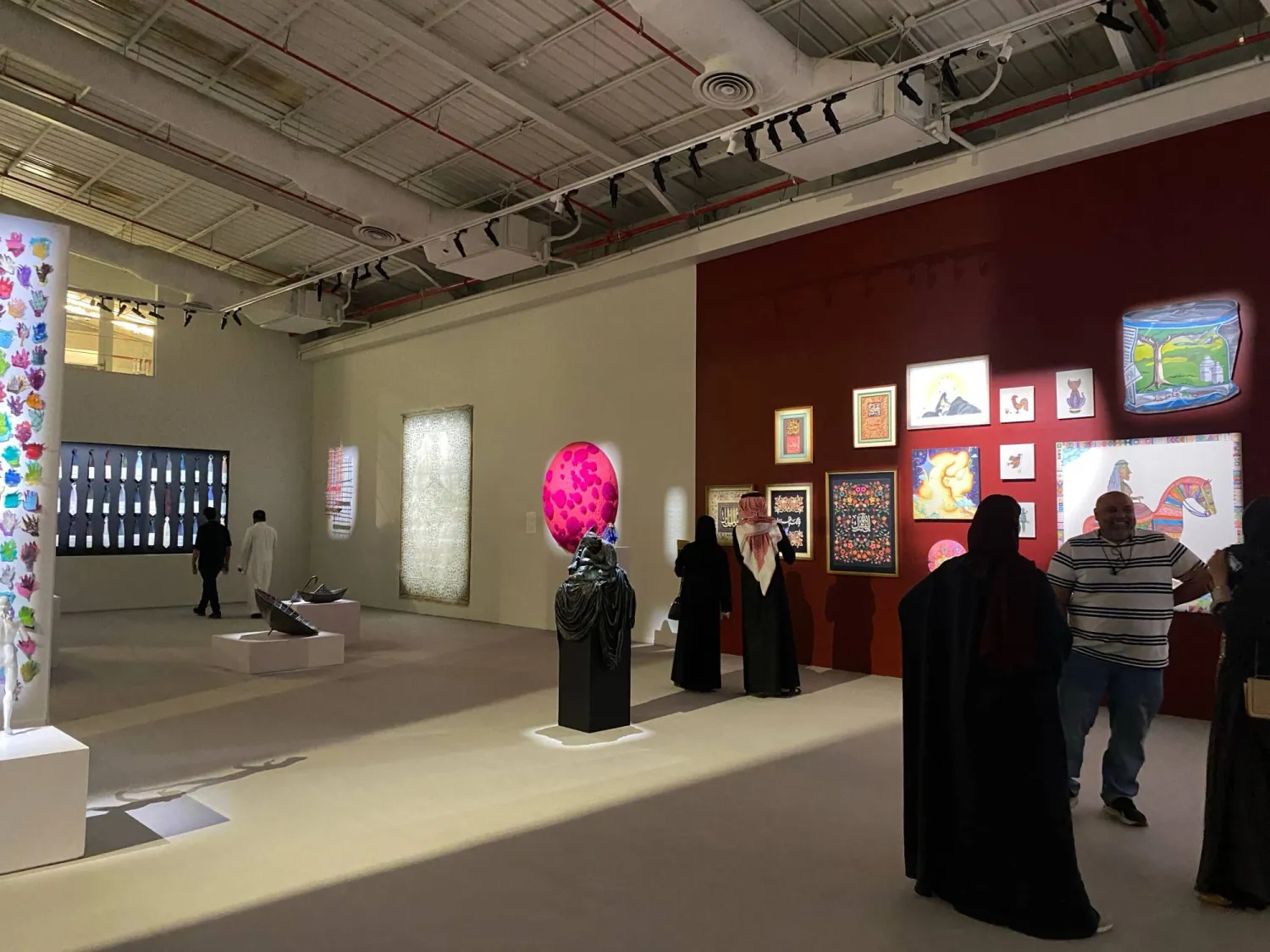
As the world experiences moments of rapid acceleration, and in a time when the boundaries between what is possible and what is real are being redrawn, the works participating in Riyadh Art Week, which launched on Sunday, come to shed light on the relationship between ideas and the tools people engage with.
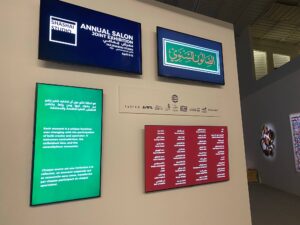
The artworks presented during Riyadh Art Week form something like a multi-layered, interconnected, and diverse map, interacting across three main themes that shape this year’s edition of the exhibition: daily life, landscapes, and ornamentation.
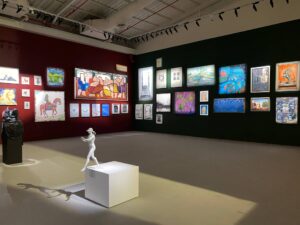
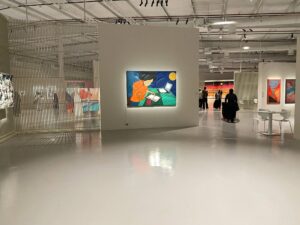
In the exhibition hall titled “An Unseen Trace,” part of Riyadh Art Week, the participating works explore the relationship with sound and reconsider it—not merely as a means of perception, but as a transformative force. The works trace manifestations of sound and music that go beyond their aesthetic function, becoming an invisible presence that connects the body to memory, rhythm to space, and the moment to what lies beyond it.
The works of artists Abdulaziz Ashour, Bdoor Al-Sudairi, Abdullah Al-Kharif, and Khaled bin Afif, featured in the An Unseen Trace exhibition, contribute to tracing the impact of individual experiences in shaping awareness. From the artists’ perspectives, music is not simply a sonic event, but an experience whose effect transcends the moment of listening and settles in a place deeper than the senses.
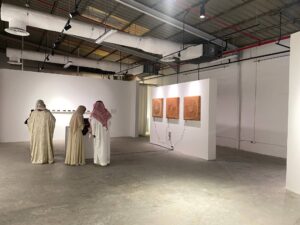
Within the artists’ multi-layered compositions, the works do not offer definitive answers, but rather open signals toward sensory experiences that extend beyond the surface of sound. They invite reflection on what remains after the experience ends—on the ability to listen to what is unspoken, to engage with what is unseen, and to sense the subtle, lasting, and quiet transformations such experiences leave within individuals.
In her work “Diriyah: The Quarter-Tone Project,” Saudi artist Bdoor Al-Sudairi engages with the contours of a question that emerged in her mind following a significant personal experience. Through her work, she attempts to answer the question: “What gives sound its identity? And how can we preserve an auditory trace in an age dominated by machines?”
Through a small box she named the “musical box,” which she created as a stage for a sound that carries memory without repeating it, Al-Sudairi seeks to rediscover sound from its roots.
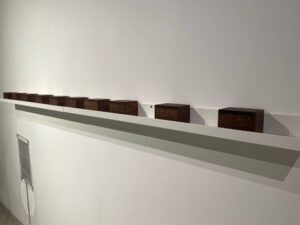
The project began with a journey undertaken by Bdoor Al-Sudairi alongside researcher Ghalib Al-Humaimeedi, aiming to gain a precise understanding of the Arabic musical note within its technical context, and the challenges it faces within industrial sound systems.
This journey, which extended across all regions of Saudi Arabia, began in 2019. During it, song served as a means of transmitting values—not merely celebrating them. As experience accumulated and disciplines overlapped, the journey evolved into an experimental project that reshapes the relationship between heritage and machine, attempting to anchor auditory identity not in the past, but within the contemporary technological moment.
The work draws inspiration from the writings of historian Ibn Bishr about Diriyah, and from the description by orientalist Jean-Louis Burckhardt of Wadi Hanifah in 1795—as if time itself transformed into a melody, and the valley into a speaking memory.
“On the Edge of the Horizon”: An Invitation to Reflection
Riyadh Art Week arrives at a time when the Saudi capital is undergoing an unprecedented transformation. Riyadh, shaped by its rich heritage, reflects this dynamism in an ideal way—especially as it sits at the crossroads of desert and city, pulsing with the rhythm of renewal. Its place becomes a narrative of adaptation and plurality, where cultural, architectural, and social landscapes harmonize. On the edge of this horizon, art emerges to provoke challenge and contemplation, portraying what awaits individuals in the future while they remain immersed in the present.
It is worth noting that the themes addressed by the participating works collectively form a multi-tonal map of transformation, revealing details of an inner rhythm where different times intersect—offering multiple perspectives on the region’s development and its ability to keep pace with the accelerating changes it is witnessing.